

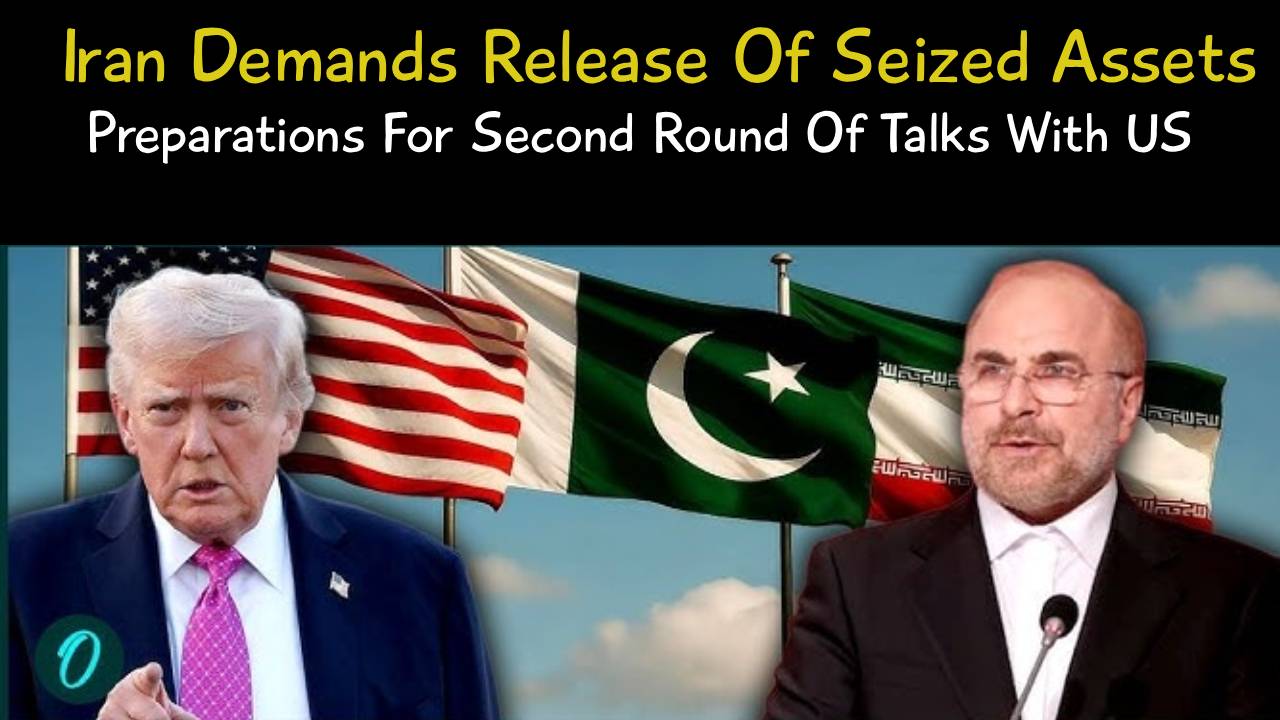
Preparations for the second round of talks between the US and Iran are now gaining momentum, but the main topic of the talks has become Iran’s ‘frozen’ or seized assets. For a long time, Iran’s economy has been under severe pressure due to sanctions from various countries, including the US. This time, the country has agreed to sit in on the talks, demanding that Iran’s seized assets be released.
Iran’s economy is under pressure from sanctions
Iran faced the first round of sanctions after the 1979 Islamic Revolution due to the deterioration of relations with the US. These sanctions have become increasingly strict, especially due to Iran’s nuclear program and ballistic missile tests. As a result, Iran’s vast assets are stuck in foreign banks, and the country is deprived of their use.
Iranian Parliament Speaker Ghalibaf’s claim
Ahead of the start of ceasefire talks in Pakistan on April 10, Iranian Parliament Speaker Mohammad Baqer Ghalibaf said on social media that Iran’s seized assets must be released before sitting in on the talks. The following day, during the meeting in Islamabad, reports emerged that the US had agreed to release at least some of the assets. Washington quickly denied this, saying that the assets were still frozen.
Amount and location of seized assets
Iran’s seized assets are spread across several countries, but the exact amount and location of the assets are unclear. According to official estimates, these assets could be worth more than $100 billion or $100 trillion. “This is about three times Iran’s annual energy export revenue,” said Frederick Schneider, a senior fellow at the Middle East Council on Global Affairs. “This is a huge amount for a society that has been under sanctions for decades,” he added.
Conditions for releasing Iran’s assets
While Iran may be granted access to the funds, conditions may apply. Former US Treasury Secretary Jacob Lew said in 2016 that Iran would not be able to fully use the assets even if sanctions were lifted. “A large part of it is already committed to various investments or debt repayments,” he said. Currently, Iran has mainly demanded the release of $6 billion, which would help build trust.
Can Read: Israeli Airstrikes Continue Despite Ceasefire, Civilian Casualties Rise In Lebanon
Frozen assets: What are frozen assets?
‘Frozen assets’ or frozen assets refer to money or assets that are held in another country or bank by an individual, institution, or a country’s central bank. This action is usually taken due to sanctions, court orders, or other restrictions.
Why were Iranian assets frozen?
Iranian assets were first frozen in 1979. At that time, President Jimmy Carter declared Iran an ‘unusual threat’ to US national security. Since then, sanctions have become more stringent due to conflicts over its nuclear program. Although the US and Iran signed a nuclear deal in 2015, the Trump administration withdrew from the deal in 2018 and reimposed sanctions.
International Economic pressure and protests
Iran’s economy has been in a state of turmoil due to long-standing sanctions. Oil exports have fallen, investment has stagnated, and the country’s people have started protests due to high inflation and currency depreciation.
What impact will the release of seized assets have on Iran’s economy?
If these long-held assets are released, Iran will be able to take a major step towards economic recovery. According to experts, this money will help Iran control the depreciation of the currency through oil sales revenues, and will be able to increase investment in infrastructure development. “This money will be used to help repair Iran’s critical infrastructure, such as oil fields, the power sector, and the water supply system,” said Roxanne Farmanfarmian, a researcher at the University of Cambridge.
Diplomatic significance
According to political analyst Chris Featherstone, the release of Iran’s seized assets could send a major diplomatic message. It could be seen as a signal of easing international pressure on Iran, which could help its relations and trade grow.
Conclusion
The release of Iran’s frozen assets is set to be a key issue in the second round of talks between Iran and the United States. If these assets are released, they could play a significant role in Iran’s economic recovery and improving political relations. However, the consequences of this move could be more complicated diplomatically, creating a new turn in international relations.
Can Read: Ceasefire Declared in Lebanon, Prospects of Deal With Iran Bright: Trump

