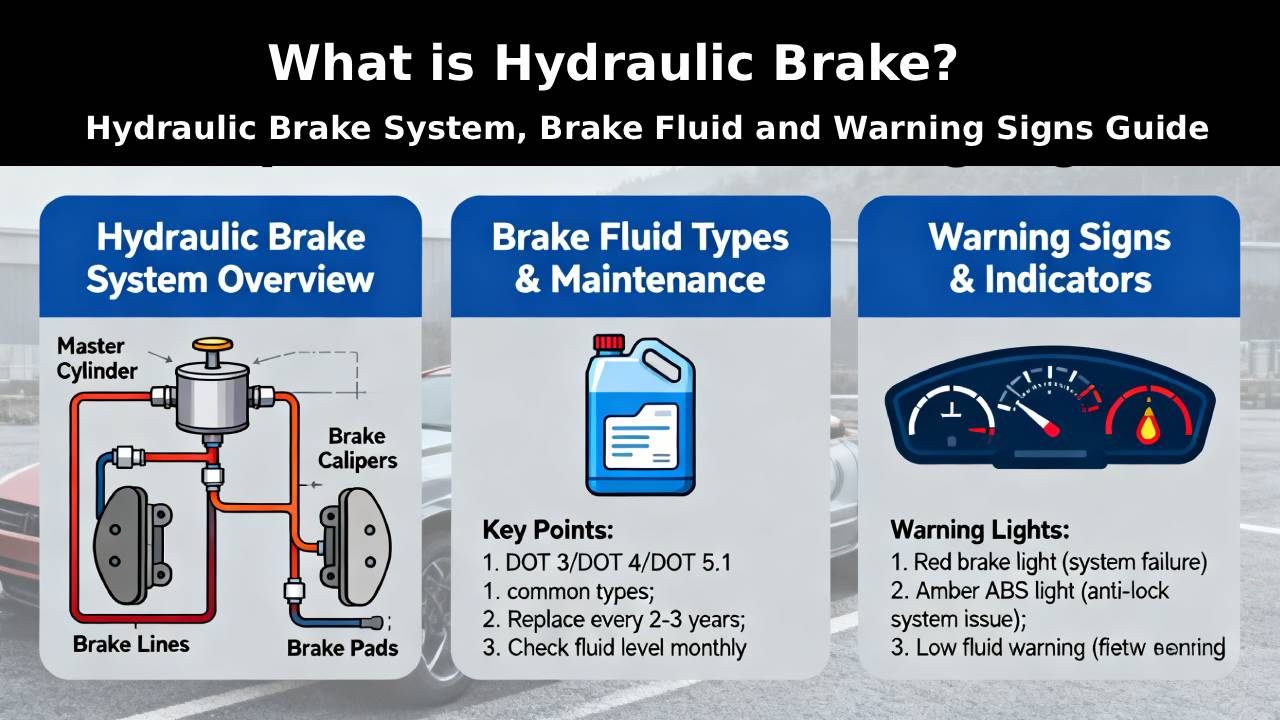
Hydraulic Brake is one of the most important safety systems in modern vehicles. Whether you drive a car, SUV, pickup truck or light vehicle, road safety is seriously compromised if the hydraulic brake system is not working properly. Through this system, the pressure from the brake pedal is transmitted to the wheels with the help of brake fluid, master cylinder, brake caliper and brake lines, which causes the vehicle to slow down or stop in a controlled manner.
But many drivers do not pay attention to warning signs such as soft brake pedal, brake warning light, brake fluid leak or reduced braking response. In this guide, we will learn in simple language what a hydraulic brake is, how the hydraulic brake system works, why brake fluid is important, and if you see any signs, you need to get a brake inspection done quickly.
What is Hydraulic Brake
A hydraulic brake is a braking system in which the mechanical force when the driver presses the brake pedal does not go directly to the wheel, but reaches the brake parts through hydraulic pressure. In simple terms, pressure is created after pressing the pedal, and that pressure goes to the wheel-end braking components with the help of brake fluid. Hydraulic brake systems are very common in modern passenger cars, SUVs, pickup trucks, and light-duty vehicles.
In the United States, when it comes to road safety, hydraulic brakes are not just a basic mechanical part, they are one of the most important parts of vehicle control. Many drivers think about the engine, transmission, or tires, but neglect the brake system. This is wrong. Because if the hydraulic brake fails, the stopping distance of the vehicle increases, vehicle control decreases, and even the risk of an accident increases significantly.
How the Hydraulic Brake System Works
A hydraulic brake system usually works with several important parts. These include the brake pedal, brake booster, master cylinder, brake fluid reservoir, brake lines, brake hose, brake caliper, brake pads, and in many vehicles, the ABS brake system.
When the driver presses the brake pedal, that force creates hydraulic pressure in the master cylinder. Then the brake fluid is sent to the wheels through the brake lines. In the case of a disc brake vehicle, the pressure goes to the brake caliper and presses the pads against the rotor. In the case of a drum brake, the wheel cylinder presses the brake shoe against the drum. As a result, the vehicle slows down and the vehicle stops.
The most important thing in this system is force multiplication. The hydraulic design amplifies the force you apply with your foot in such a way that the vehicle stops quickly and in a controlled manner. This is why the hydraulic brake system is much more effective than the manual mechanical brake.
Main parts of the hydraulic brake
To understand the hydraulic brake, it is necessary to know its core components. The master cylinder is the heart of the system. This is where the hydraulic pressure is created. The brake fluid reservoir stores the fluid. The brake lines and hoses carry the pressure. In a disc brake vehicle, the brake caliper presses the pads against the rotor. And the brake pads create friction and slow the vehicle.
In addition, in modern vehicles, the ABS brake system is integrated with the hydraulic brake. ABS or anti-lock braking system helps prevent wheel lock during hard braking. As a result, the driver can maintain more steering control on wet roads, icy roads or emergency braking situations.
Why is Brake Fluid so Important
Many people think of brake service as just changing brake pads. This is half the story. The proper functioning of the hydraulic brake system depends largely on brake fluid. Brake fluid transmits pressure, tolerates heat and helps maintain consistent pedal feel.
In the United States, DOT 3 brake fluid and DOT 4 brake fluid are commonly used. Some vehicles may also have DOT 5 or DOT 5.1, but not all fluids are the same. The manufacturer’s recommended specification should be used. Using the wrong brake fluid can cause seal damage, poor braking performance or expensive repairs.
Brake fluid can absorb moisture over time. This reduces the boiling point. If the brake system overheats, fluid performance can decrease and the pedal feel can become spongy. So just topping up the brake fluid is not enough, it needs to be replaced if necessary.
Common Symptoms of Hydraulic Brake Problems
Hydraulic brake system problems do not come on suddenly in a big way. Usually, some warning signs are seen first. The most common symptom is a soft brake pedal. If the pedal feels unusually soft or starts to go down, then a brake fluid leak, air in the brake lines, a master cylinder issue or brake bleeding may be necessary.
Another big warning is the brake warning light being on. Many drivers ignore the dashboard light. This is foolish. If the brake warning light is on, there may be a low brake fluid, pressure imbalance or parking brake issue.
In addition, increased stopping distance, vehicle pulling to one side during braking, reduced brake fluid level, no pressure when the pedal is not pumped, or grinding noise are also serious signs. Ignoring the symptoms of hydraulic brakes means creating a major safety risk from a small problem.
What is Brake Bleeding and When is it Needed
Brake bleeding is the process of removing trapped air from the hydraulic brake system. Air entering the brake lines can cause the pedal to become spongy and the braking response to be poor. Sometimes, brake bleeding is necessary after a brake hose change, caliper replacement, master cylinder repair, or fluid loss.
Many DIY drivers want to bleed their brakes themselves. It can be done, but if done incorrectly, the pedal feel can be worse. If you have an ABS brake system, the bleeding procedure can be more sensitive. So a basic fluid refill is not the same as a full brake bleed. If the pedal is soft, the brake has been repaired, or the line has been opened, then proper bleeding is essential.
Can Read: Refrigerator Not Cooling? How To Tell If The Compressor Is Bad
Why is Hydraulic Brake Maintenance Important in the United States
There are many types of driving conditions in the United States. Highway driving, city traffic, mountain road, snow, rain, towing, pickup use, long-distance travel, all put extra stress on the brake system. So there is no room for American vehicle owners to neglect hydraulic brake maintenance.
A hydraulic brake check is also very important for used car buyers. During a test drive, you should not only check whether the car stops or not. You should also check the pedal feel, whether the vehicle stops in a straight line, whether the brake warning light is on, and whether the brake fluid is visibly dirty or low. Many used cars may have new brake pads, but the brake fluid may be old, the master cylinder weak, or the hose damaged.
In the case of fleet vehicles, delivery vans, family SUVs, commuter cars, and even small business pickups, a hydraulic brake inspection is a money-saving decision. Because early repairs are usually cheap, but delayed failure is expensive.
The relationship between Hydraulic Brake and ABS Brake System
Many people think that ABS brake systems and hydraulic brakes are different things. In fact, ABS is an advanced control layer that works on top of the general hydraulic brake system. It modulates braking pressure to prevent wheel lock. As a result, vehicle skids and the driver can maintain steering control.
However, one thing needs to be clear. ABS does not make the brake system perfect. If the brake fluid is contaminated, the master cylinder is weak, or there is a hydraulic leak, then the ABS system will not be able to fix the underlying hydraulic problem. Therefore, both the ABS warning light and the brake warning light need to be taken seriously.
Practical tips for maintaining good hydraulic brakes
To maintain good hydraulic brakes, you should check the brake fluid level regularly. It is necessary to inspect or replace the brake fluid according to the manufacturer-recommended interval. If the brake pedal feel changes, you should check it without delay. When changing brake pads, you should not only check the pad, but also the caliper movement, hose condition, rotor surface, and fluid condition.
If the brake warning light comes on on the dashboard, you feel a soft brake pedal, vibration occurs during braking, or fluid leaks are seen, then it is not a “we will see later” type of matter. The later the brake issue is caught, the higher the repair bill can be and the greater the safety risk.
A final word on hydraulic brakes
Hydraulic brakes are a safety system without which modern vehicle driving is practically impossible. It is not just a story about the brake pedal and brake pads. It involves the hydraulic brake system, brake fluid, master cylinder, brake caliper, brake bleeding, soft brake pedal, brake warning light and ABS brake system. Understanding these issues makes vehicle maintenance decisions much better.
Can Read: Why Is Thermal Paste Important? Proper Use, Problems And Solutions In One Article